
Hi everyone! I know its easy to be anxious about the earth. While it is important to be informed and care about the environment, too much anxiety is counterproductive. I wanted to take the time to inspire you with positive environmental news from 2022.

Nuclear Fusion Breakthrough
On December 5, scientists at the Lawrence Livermore National Laboratory in California had a breakthrough in nuclear fusion energy production. For the first time ever, they set up a nuclear fusion reaction that produced more energy than it took to create. To catalyze the reaction, the laboratory’s laser complex shot 192 lasers at a tiny capsule containing one tritium isotope and one deuterium isotope, both of which are isotopes of hydrogen. The isotopes vaporized, releasing a huge amount of energy. The experiment had been tried many times before, but the energy input of the lasers had always exceeded the output of the fusion. On December 5, however, the isotopes were held in a thicker capsule, which made them hot and dense enough that they fused and released more energy than the lasers expended. The lasers hit the isotopes with roughly two megajoules of energy, and the fusion produced about three megajoules, generating a gain of 1.5 (“Nuclear Fusion Breakthrough: The Future of Clean, Limitless Energy”). That energy gain would be enough to boil 2.5 gallons of water (Nilsen). While that is not a lot, it shows that nuclear fusion can be a viable energy source.
Why is nuclear fusion special?
Nuclear fusion would make an excellent energy source since it runs off easily accessible hydrogen and produces efficient, carbon-free energy. It is much safer than nuclear fission, which is used in current nuclear power plants. Nuclear fission splits atoms to produce energy and poisonous waste, while fusion fuses atoms to yield energy and harmless byproducts (“Nuclear Fusion Breakthrough: The Future of Clean, Limitless Energy”). The atoms being fused are deuterium and tritium, which are isotopes of hydrogen. As an illustration of how efficient nuclear fusion is, if a little tritium was fused with the amount of deuterium from a glass of water, the energy from the reaction would power a house for a year (Nilsen, Ella and Rene Marsh). The byproducts of nuclear fusion are helium nuclei and high energy neutrons (“DOE Explains… Nuclear Fusion Reactions”).
Dr. Kim Budil, the director of the Lawrence Livermore National Laboratory, predicts that fusion power plants will be built “with a few decades of research and investment” (“Nuclear Fusion Breakthrough: The Future of Clean, Limitless Energy”). Nuclear fusion power plants might even take off as quickly as nuclear fission power plants did. In 1942, the first nuclear fission reactor ran for five minutes in Chicago. Fifteen years later, the first nuclear power plant was installed in Pennsylvania (Nilsen). In addition, magnetic nuclear fusion is being explored as well as fusion caused by lasers. Magnetic fusion involves tokamaks, or doughnut shaped devices that use magnets to squeeze plasma into small shapes (“Nuclear Fusion Breakthrough: The Future of Clean, Limitless Energy”).

2022 Has Seen A Huge Increase in Renewable Energy
This past year has seen a major increase in renewable energy. The world’s electricity demand rose by about 3% since 2021, but solar, wind, and hydroelectric power met the additional demand for the first half of 2022. That reduced carbon emissions by 230 million metric tons, or the equivalent of 49 million gas powered cars (“Renewables have saved 230 million tonnes of CO2 emissions so far in 2022”).
The overall increases in renewable energy are likely due to changes in the United States and Europe. Solar and wind have grown 58% in the United States since 2019. As a result, 2022 marked the second year that renewables produced more energy for the country than coal, satisfying about 22% of its energy usage (“Renewables to produce more energy than coal for the first time this year”). European countries have been taking even more drastic steps. Portugal, Denmark, and Austria have goals to be powered solely by solar, wind, and hydroelectric in 2030, while the Netherlands aims to be powered solely by those renewables plus nuclear. (“These EU countries are aiming for 100% clean power by 2030”). Although Greece is not aiming to be 100% renewable in 2030, it made history on October 7 by being solely run on renewable energy for five hours (“Major milestone for Greek energy as renewables power 100% of electricity demand”). Renewables are starting to become a major provider of the world’s electricity.

Millions of Trees Are Being Planted for Reforestation Efforts
This past year, there have been several massive reforestation projects. Forest cover is important since trees produce oxygen and absorb carbon dioxide, prevent flooding by holding water, and keep areas moist through transpiration. In the United States, the federal National Forest Foundation planted over eight million trees (“2022 National Forest Foundation Year in Review”). Some of the trees are in forests being restored after wildfires, such as in Oregon’s Willamette National Forest, or after being destroyed by beetles, such as in Grand Mesa National Forest in Colorado. Others have not experienced natural disasters but need more trees to be healthy, thriving ecosystems (Perez-Watkins). In addition, a charity called One Tree Planted has been planting trees and vegetation all over the world. While statistics have not been released for the nonprofit’s work in 2022, in 2021 the organization’s volunteers planted about 25,588,232 trees through 166 projects in 42 countries (“Our 2021 Planting Report”). During autumn 2022, One Tree Planted supported events in 29 countries to plant 39,558 trees and 6,144 shrubs. Some countries served by the organization include Columbia, Tanzania, Thailand, and the United States (Weeden).
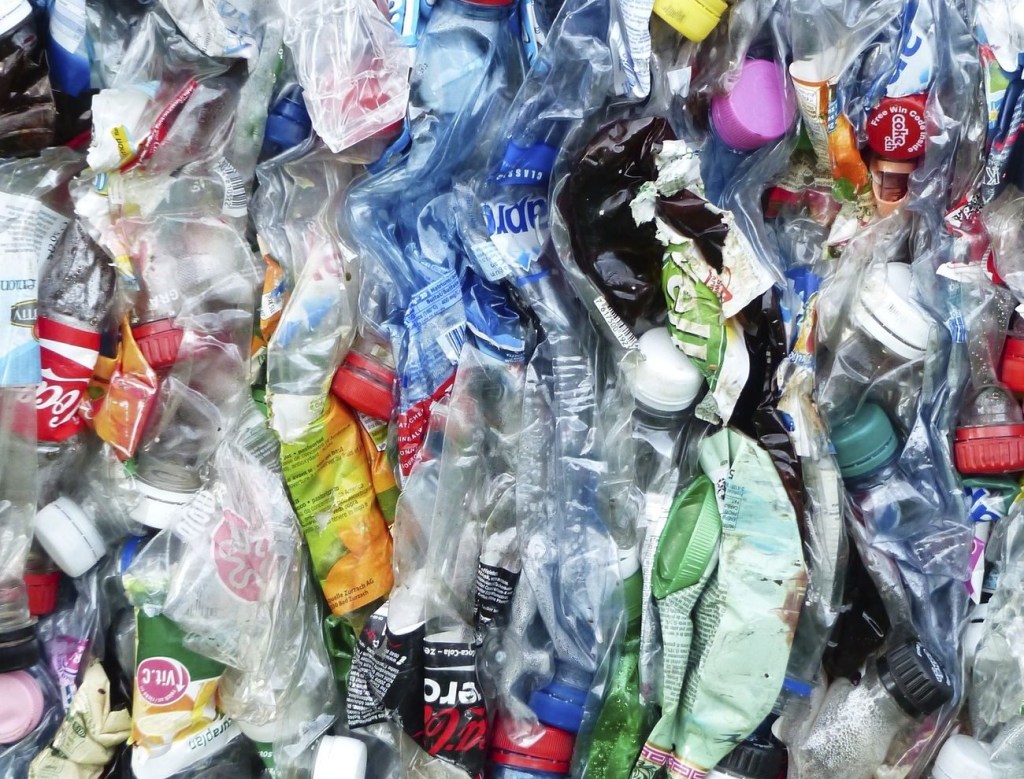
States and Countries are Cutting Down Single Use Plastics
Multiple parts of the world have been reducing the use of single-use plastics and replacing them with either biodegradable packaging or reusable items. In 2022, California passed a law demanding a 25% drop in single-use plastics in the state by 2032. It also set a goal for 30% of plastic items bought and sold in California to be recyclable by 2028, created a pollution mitigation fund paid by plastic companies, and set strictly enforced criteria for polystyrene recycling that could lead to a ban on the material. California’s decision to cut down on plastics should reduce worldwide pollution since California is a major source of it (Anguiano).
The UK and the European Commission are taking even more extreme measures to reduce single-use plastics. Single-use plastic plates, cutlery, balloon sticks, and some types of polystyrene cups will be phased out and eventually banned in the UK. The UK government intends to replace the plastics with biodegradable alternatives (“Single-use plastic items to be banned in England – reports”). The European Commission, on the other hand, wants to make more items reusable. For instance, they decreed that 20% of takeaway drink cups in their domain would be reusable by 2030 and 80% would be reusable by 2040. As a result, McDonald’s France and other European companies are testing out reusable packaging (“This reusable McDonald’s packaging went viral”).
Seaweed Packing
Scientists are doing their part by developing new types of biodegradable packaging. One popular option is seaweed. A number of startup companies have begun selling seaweed products, including bags, cups, trays, sauce packets, takeout boxes, pipettes, drinking straws, vegan leather, “plastic” films, and waterproof cardboard coatings (“10 Seaweed Packaging Startups You Need to Know”). In 2022, researchers from Flinders University in Australia partnered with a German biomaterials developer to specifically create grease proof wrappings. The packaging is effective and safer than grease proof paper, which contains plastic and sometimes dangerous chemicals like PFASs (“Your burger could soon come wrapped in packaging made from seaweed”).
Efficient Sea Salt Batteries Could Replace Lithium Batteries
Batteries are necessary to everything from wall clocks to smart phones to electric cars. As wind and solar power take off, batteries are needed to store their intermittent electricity. Many batteries are built with rare metals such as lithium, graphite, and cobalt. Since lithium is the main metal used in batteries, the European Union alone might need 18 times more lithium by 2030 to meet their renewable energy goals. Unfortunately, lithium is expensive (“’Significant breakthrough’: This new salt sea battery has four times the capacity of lithium”), and its mining causes a number of environmental problems, including water shortages and air contamination (Campbell). In order to combat those problems, scientists at the University of Sydney invented a new battery that runs on sodium sulfur, or molten salt processed from sea water. It stores four times the energy of a lithium battery and is much cheaper. According to the battery’s inventors, it also has an “ultra-long life at room temperature” (“’Significant breakthrough’: This new salt sea battery has four times the capacity of lithium”). Sea salt batteries are a welcome alternative to lithium ones.
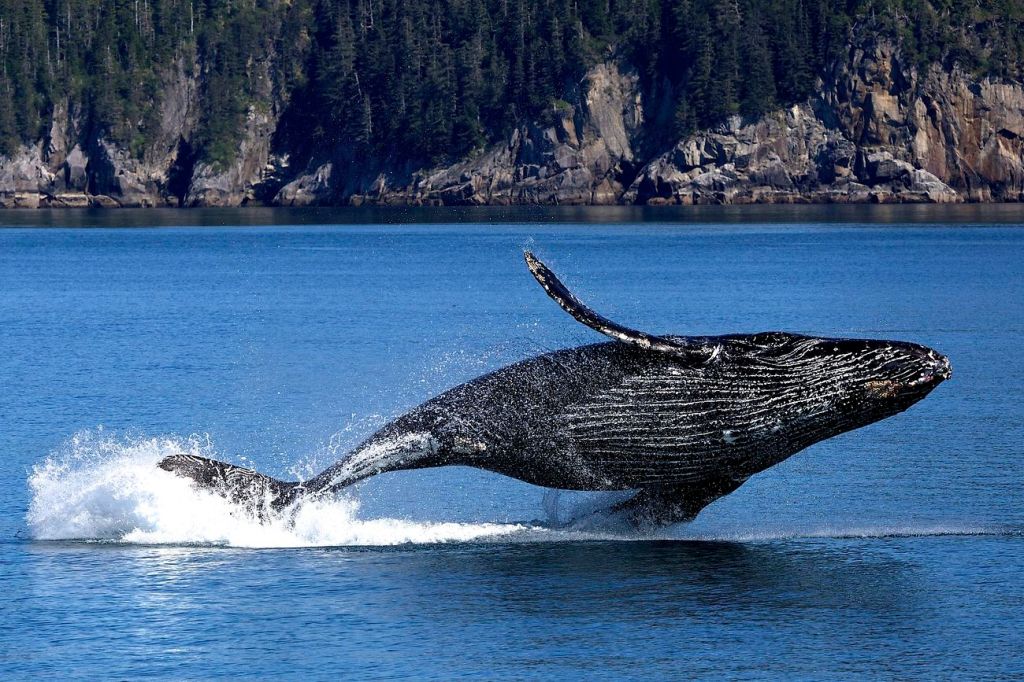
Humpback Whales No Longer Threatened in Australia
A final piece of good news is that there is a large community of humpback whales in the waters near Australia! Humpbacks were removed from Australia’s threatened species list in 2022. They were originally put on the list since their numbers had decreased to about 1,500 whales at the height of the whaling industry. Now, there are about 40,000 whales in the waters near Australia. The whales are still protected by a number of international and domestic laws, including statutes against whaling (Wahlquist).
Conclusions
This article covered six positive environmental developments from 2022. I hope you are encouraged by this information as much as I am! Feel free to comment below, share this post, or check out some of my other blog articles.
Wishing you a happy 2023!
Sources
Here are my sources for this post. Feel free to check them out! A few of these sources have the same author, so they are cited in the article by their title instead of their author’s name.
Anguiano, Dani. “California passes first sweeping US law to reduce single-use plastic.” The Guardian, Jun. 30, 2022, www.theguardian.com/us-news/2022/jun/30/california-single-use-plastic-reduce- law-gavin-newsom. Accessed Dec. 20, 2022.
Campbell, Maeve. “In pictures: South America’s lithium fields reveal the dark side of our electric future.” euronews.green, Nov. 21, 2022, www.euronews.com/green/2022/02/01/south-america- s-lithium-fields-reveal-the-dark-side-of-our-electric-future. Accessed Dec. 19, 2022.
“DOE Explains… Nuclear Fusion Reactions.” Energy.gov: Office of Science, http://www.energy.gov/science/doe-explainsnuclear-fusion-reactions. Accessed Dec. 27, 2022.
Elton, Charlotte. “’Significant breakthrough’: This new sea salt battery has four times the capacity of lithium.” euronews.green, Dec. 14, 2022, http://www.euronews.com/green/2022/12/13/significant- breakthrough-this-new-sea-salt-battery-has-4-times-the-capacity-of-lithium. Accessed Dec. 19, 2022.
Elton, Charlotte. “Your burger could soon come wrapped in packing made from seaweed.” euronews.green, Oct. 24, 2022, www.euronews.com/green/2022/10/23/your-burger-could-soon- come-wrapped-in-packing-made-from-seaweed. Accessed Dec. 19, 2022.
Frost, Rosie. “Renewables have saved 230 million tonnes of CO2 emissions so far in 2022.” euronews.green, Oct. 10, 2022, www.euronews.com/green/2022/10/06/rise-of-renewable- energy-has-prevented-230-million-tonnes-of-co2-emissions-so-far-this-yea. Accessed Dec. 19, 2022.
Frost, Rosie. “Renewables to produce more energy than coal in the US for the first time this year.” euronews.green, Nov. 24, 2022, www.euronews.com/green/2022/11/24/renewables-to-produce- more-energy-than-coal-in-the-us-for-the-first-time-this-year. Accessed Dec. 19, 2022.
Frost, Rosie. “These EU countries are aiming for 100 per cent clean power by 2030.” euronews.green, Oct. 18, 2022, www.euronews.com/green/2022/10/17/these-eu-countries-are-aiming-for-100- per-cent-clean-power-by-2030. Accessed Dec. 19, 2022.
Frost, Rosie. “This reusable McDonald’s packaging went viral: Could it be the future in Europe?” euronews.green, Nov. 30, 2022, www.euronews.com/green/2022/11/30/this-reusable- mcdonalds-packaging-went-viral-could-it-be-the-future-in-europe. Accessed Dec. 19, 2022.
“Major milestone for Greek energy as renewables power 100% of electricity demand.” euronews.green with Reuters, Oct. 11, 2022, www.euronews.com/green/2022/10/11/major-milestone-for-greek- energy-as-renewables-power-100-of-electricity-demand. Accessed Dec. 19, 2022.
Nilsen, Ella. “US officials announce nuclear energy breakthrough: Why a net gain in energy matters.” CNN, Dec. 13, 2022, www.cnn.com/us/live-news/nuclear-fusion-reaction-us-announcement-12- 13-22/index.html. Accessed Dec. 16, 2022.
Nilsen, Ella and Rene Marsh. “US officials announce nuclear fusion breakthrough: What you need to know about today’s nuclear fusion announcement – and what comes next.” CNN, Dec. 13, 2022, www.cnn.com/us/live-news/nuclear-fusion-reaction-us-announcement-12-13-22/index.html. Accessed Dec. 16, 2022.
“Nuclear Fusion Breakthrough: The Future of Clean, Limitless Energy.” Forbes, Q.ai, Dec. 14, 2022, www.forbes.com/sites/qai/2022/12/14/nuclear-fusion-breakthrough-the-future-of-clean- limitless-energy/. Accessed Dec. 16, 2022.
“Our 2021 Planting Report: Behind the Scenes of Planting 23 Million Trees Across the Globe: Our Impact in 2021.” One Tree Planted, onetreeplanted.org/pages/2021-recap. Accessed Dec. 27, 2022.
Perez-Watkins, Monica. “2022 Tree Planting Projects.” National Forest Foundation, www.nationalforests.org/blog/2022-tree-planting-projects. Accessed Dec. 20, 2022.
“Single-use plastic items to be banned in England – reports.” The Guardian, Dec. 13, 2022, www.theguardian.com/environment/2022/dec/13/single-use-plastic-items-to-be-banned-in- england-reports. Accessed Dec. 20, 2022.
“10 Seaweed Packaging Startups You Need to Know.” sourcegreen, www.sourcegreen.co/food- packaging/10-seaweed-packaging-startups-algae/. Accessed Dec. 31, 2022.
“2022 National Forest Foundation Year in Review.” National Forest Foundation, www.nationalforest.org/2022-nff-year-in-review. Accessed Dec. 31, 2022.
Wahlquist, Calla. “Humpback whales removed from Australia’s threatened species list but feeding grounds still at risk.” The Guardian, Feb. 25, 2022, www.theguardian.com/environment/2022/feb/26/humpback-whales-removed-from-australias- threatened-species-list-but-feeding-grounds-still-at-risk. Accessed Dec. 20, 2022.
Weeden, Meaghan. “Plant a Tree Day 2022: Planting Trees, Growing Community: Community Reforestation for Global Impact: Plant a Tree Day 2022.” One Tree Planted, Nov. 3, 2022, onetreeplanted.org/blogs/stories/plant-a-tree-day-2022. Accessed Dec. 27, 2022.

 Owl Tree View