
Hi everyone! I wanted to write an article about the zero-waste lifestyle since I’ve been interested in it for a long time. Simply defined, the zero-waste lifestyle requires producing minimal waste. I wanted to share the reasoning behind the lifestyle and practical ways that people can accomplish it.
Reason #1: The world is running out of space for its garbage.
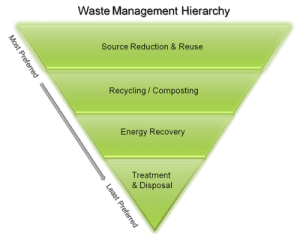
The main reason to practice a zero-waste lifestyle is to reduce the world’s garbage. In the United States alone, the average person throws away at least 1,609 pounds of trash per year. This nation only has 5% of the world’s population, but discards 40% of its waste (Acimovic). According to one statistic, the United States and Canada are the two highest per capita generators of municipal solid waste in the world, with 2.58 kg (5.7 lbs) and 2.33 kg (5.1 lbs) of garbage generated per person per day respectively (Tiseo). The United States’s garbage has almost doubled since 1960. It grew from roughly 2.68 pounds per person per day in 1960 to 4.9 pounds per person per day in 2018. Fortunately, more trash is being recycled, composted, and combusted for energy (“National Overview”).
The focus of the zero-waste lifestyle is reducing municipal solid waste. The EPA defines municipal solid waste as “various items consumers throw away after they are used”. It includes plastic bags, tires, old clothing, and computers, but doesn’t include construction and demolition debris and municipal wastewater sludge. In the United States, the total generation of municipal solid waste was 292.4 million tons in 2018. Out of that amount, 69 million tons were recycled, 25 million tons were composted, 35 million tons were combusted for energy recovery, 146 million tons were landfilled, and 17.7 million tons were dealt with by other methods (“National Overview”).

Not all developed countries manage their trash in the same way as the United States. Sweden, for instance, only dumps 1% of its trash in landfills. Instead, Swedes recycle 47% of it and burn 52% to create energy. The energy heats 1 million homes and provides electricity to 250,000 homes. In order to encourage its citizens to recycle, the Swedish government has built recycling centers within a thousand feet of every residential area and gives discount vouchers to citizens who use recycling machines (Acimovic).

Reason #2: Plastic in the ocean
One of the best indicators of the worldwide garbage crisis is the amount of plastic that ends up in the ocean. That plastic harms marine life and pollutes sea food with dangerous chemicals. In 2020, 126.5 million kg (about 279 million lbs) of plastic waste from India ended up in the ocean, making the country the ocean’s leading plastic polluter. That much plastic would weigh the same as 250 thousand bottlenose dolphins. The United States produces about 42 billion kg of plastic waste annually, which is double the amount that India produces. However, only 2.4 million kg of American plastic waste ends up in the ocean. At first glance, that makes America look eco-friendly. The hidden reality, however, is that America exports much of its plastic waste, especially to countries with poor waste management systems. In fact, 12% of America’s exported plastic waste went to India in 2018. Plastic waste from America may end up in the ocean off of other countries (Melville).
The Ocean’s Top 10 Plastic Polluters
| Country | Amount of Plastic Waste in the Ocean | |
|---|---|---|
| 1 | India | 126.5 million kg |
| 2 | China | 70.7 million kg |
| 3 | Indonesia | 56.3 million kg |
| 4 | Brazil | 38 million kg |
| 5 | Thailand | 22.8 million kg |
| 6 | Mexico | 3.5 million kg |
| 7 | Egypt | 2.5 million kg |
| 8 | United States | 2.4 million kg |
| 9 | Japan | 1.8 million kg |
| 10 | United Kingdom | 703 thousand kg |
(Melville)
Reason #3: Waste disposal strains relationships between countries
Although recycling plastic is helpful, it is difficult to find buyers for the plastic. Roughly one-third of American recyclables are shipped overseas, so the industry depends on a global market. Unfortunately, the market for recyclables was greatly reduced in 2018 when China no longer accepted them. Prior to China’s ban, the United States had exported roughly one-sixth of its recyclables to that country. For decades, China had recycled the world’s garbage to fuel its manufacturing boom. However, the large amounts of trash soon became a danger for China’s people and its environment. In a statement the Chinese government released to explain their ban, they described shipments of recyclable materials contained nonrecyclables that were “dirty” and “hazardous” (Profita). At least 30% of the materials sent to China were contaminated by nonrecyclables, so they were thrown away in landfills. Some likely even ended up in the ocean (Cho). All things considered, China’s ban on accepting recyclables is understandable.
After the ban took effect, the United States began to ship to Vietnam, Malaysia, and Thailand, but soon those countries closed their borders as well. Currently, the United States ships recyclables to Cambodia, Bangladesh, and Ghana since those countries have lax environmental laws and cheap labor (Fernandez). Unfortunately, the fact that our nation sends huge amounts of trash and recycling abroad strains its international relations and unfairly harms the citizens of poorer countries.
What is the solution to these problems?
I believe a zero-waste lifestyle is the best solution to plastic pollution. A zero-waste lifestyle involves boycotting trash by only using reusable items. If a person buys a single-use item, it should be either compostable or recyclable. Inspiring examples of people living zero-waste include those who collect only one jar full of trash each year. Unfortunately, boycotting waste is much easier said than done. Some zero-waste practices include drinking out of reusable mugs at coffee shops, buying secondhand furniture and clothing, bringing reusable bags to stores, and creating DIY cleaners and personal care items (Jakob). Here is a list of zero-waste tips that we can implement.
21 Zero-Waste Tips
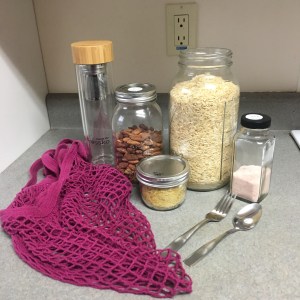
- Drink out of a reusable water bottle and use reusable food containers. This could include mugs and Pyrexes for ordering out.
- Buy loose vegetables and fruits and carry them in a cloth bag.
- Compost food scraps.
- Buy secondhand items. Many household items, like furniture and clothing, can be found secondhand at thriftstores or through neighborhood Facebook groups.
- Replace paper towels with reusable clothes and napkins.
- Try shampoo and conditioner bars.
- Pack your own lunch instead of buying lunch.
- Donate items that you no longer use.
- Research zero waste personal products. There are many compostable and zero-waste products out there, and there are also many DIY recipes for items like deodorant, toothpaste, mouthwash, shampoo, and face masks.
- Borrow books from the library. If you buy books, buy e-books or secondhand books instead of new paper books.
- Recycle whatever can be recycled in your area.
- Don’t buy items that you don’t need. For instance, don’t worry about buying the latest clothing or electronics.
- Make your own food instead of buying processed food. While it may be time consuming, people can make their own hummus, breads, crackers, cookies, and other normally processed food items. Making food in large batches and freezing it may be a good idea.
- Grow your own vegetables. I’m trying to grow tomatoes and basil in pots this year, which I’m excited about.
- Eat less meat and more local produce.
- Make DIY cleaners and detergents. Cleaners can easily be made out of citrus peals.
- Buy from farmer’s markets, shops selling local food, and zero-waste stores. Many zero-waste stores have food in dispensers instead of bags.
- Give experience gifts instead of physical gifts. For instance, give a friend a gift card to a restaurant or movie theater in lieu of a physical item.
- Avoid buying balloons and other needless plastic items. You could probably find compostable or reusable decorations instead.
- Use a reusable shaving razor and reusable q-tips.
- Take school notes on the computer instead of paper notes. I’ve personally started writing outlines for my blog articles online instead of writing on paper to organize my information.
The tips above are either ones I’ve tried personally or that I’m interested in trying. Most of my ideas are from the article “90 Zero Waste Tips For Beginners” written by Merilin Vrachovska on the blog Almost Zero Waste. Here’s a link to the article if you want more ideas: www.almostzerowaste.com/simple-zero-waste-tips/.
Shampoo and Toothpastes: Zero-Waste DIY Products
Sometimes, people make their own products in order to find a zero-waste version. A zero-waste lifestyle involves coming up with innovative solutions for common problems. For instance, people with curly, thick, dry hair may not need any shampoo and can simply wash their hair with water. Others might be able to forgo shampoo by washing with a baking soda paste (Bennett). DIY toothpastes are helpful as well. Toothpaste tubes are often impossible to recycle since they are made up of fused plastic and aluminum. In addition, commercial toothpastes often contain the detergent sodium lauryl sulfate and the antimicrobial agent triclosan. Sodium lauryl sulfate is concerning since it is a potentially unsafe chemical that was originally patented as a pesticide. Triclosan, on the other hand, can cause a number of problems ranging from making bacteria resistant to antibiotics to poisoning aquatic ecosystems. In order to deal with those problems, many people purchase or make their own zero-waste toothpastes and tooth powders (Binford). Some dentists don’t recommend DIY toothpastes since they don’t contain fluoride, a mineral that strengthens teeth. However, others recommend DIY recipes made of coconut oil and baking soda. Coconut oil kills cavity-causing bacteria and boosts good bacteria in the mouth (Didonato, Burhenne), while baking soda is an alkaline that neutralizes acid in the mouth (Didonato). Dentists that recommend DIY toothpaste suggest making sure that you have fluoride from other sources, such as from your water supply (Didonato, Burhenne). Personally, I’ve experimented with a simple toothpaste recipe that involved mixing 1 tablespoon of coconut oil with ½ tablespoon of baking soda (Binford). I’ve tried it out for the past week, and as far as I can tell, it cleaned my teeth well.
Conclusions
I hope you’ve enjoyed reading about the zero-waste lifestyle and the purposes behind it. Let’s protect the Earth’s future by finding ways to reduce our trash. Feel free to share this post, comment on it, or check out some of my other blog articles!
Sources
Here are the sources I used. Feel free to check them out for more information.
Acimovic, Ilija. “29 Recycling Statistics We Need to Be Aware of in 2023.” Comfy Living, Dec. 12, 2022, www.comfyliving.net/recycling-statistics/. Accessed Mar. 30, 2023.
Bennett, Hazel. “7 Zero Waste Shampoo Alternatives.” Almost Zero Waste, www.almostzerowaste.com/zero-waste-shampoo-alternatives/. Accessed Apr. 10, 2023.
Binford, Evan. “Zero Waste Toothpaste: The Growing Trend Towards No-Waste Pastes.” Utopia, May 4, 2020, www.utopia.org/guide/zero-waste-toothpaste/. Accessed Apr. 10, 2023.
Burhenne, Mark. “The Best and Worst Toothpaste Ingredients.” ask the dentist, Feb. 22, 2022, www.askthedentist.com/diy-toothpaste/. Accessed Apr. 12, 2023.
Cho, Renee. “Recycling in the U.S. Is Broken. How Do We Fix It?” Columbia Climate School, Mar. 13, 2020, www.news.climate.columbia.edu/2020/03/13/fix-recycling-america/. Accessed Apr. 13, 2023.
Didonato, Jill. “Can You DIY Your Own Toothpaste? We Asked Dentists.” Byrdie, Feb, 27, 2022, www.byrdie.com/diy-toothpaste-5095803. Accessed Apr. 12, 2023.
Fernandez, Valentina. “Where Does Your Recycling Really Go?” Dartmouth Undergraduate Journal of Science, Sept. 9, 2021, www.sites.dartmouth.edu/dujs/2021/09/09/where-does-your- recycling-really-go/. Accessed Apr. 5, 2023.
Jakob, Stefanie. “Zero-Waste Lifestyle 101: How to Lead A No-Waste Life.” Utopia, Jan. 17, 2023, www.utopia.org/guide/zero-waste-lifestyle/. Accessed Apr. 10, 2023.
Melville, Sabrina Fearon. “Ranked: The top 10 countries that dump the most plastic into the ocean.” euronews.green, Jun. 22, 2021, www.euronews.com/green/2021/06/22/ranked-the-top-10- countries-that-dump-the-most-plastic-into-the-ocean. Accessed Apr. 5, 2023.
“National Overview: Fact and Figures on Materials, Wastes and Recycling.” EPA, www.epa.gov/facts-and-figures-about-materials-waste-and-recycling/national-overview-facts- and-figures-materials. Accessed Mar. 30, 2023.
Profita, Cassandra and Jes Burns. “Recycling Chaos In U.S. As China Bans ‘Foreign Waste’.” NPR, Dec. 9, 2017, www.npr.org/2017/12/09/568797388/recycling-chaos-in-u-s-as-china-bans- foreign-waste. Accessed Apr. 5, 2023.
Tiseo, Ian. “Daily municipal solid waste generation per capita worldwide in 2018, by select country.” statista, Feb. 6, 2023, www.statista.com/statistics/689809/per-capita-msw-generation-by- country-worldwide/. Accessed Apr. 4, 2023.
Vrachovska, Merilin. “90 Zero Waste Tips For Beginners (Impactful & Easy Habits)”. Almost Zero Waste, www.almostzerowaste.com/simple-zero-waste-tips/. Accessed Apr. 10, 2023.

 Owl Tree View
This is a very good article on what a zero waste lifestyle is, and also the reasons behind why people are striving for this lifestyle. I learned a bit about the issues with the American recycling system in my Environmental Science class and I’ll say everything I learned lines up with exactly what you’re saying here. Recycling is very important, but it is a broken system. And while the amount of waste coming from America is certainly discouraging, be it on paper or when we view these grass-lined-geometrically-shaped piles of trash, it is very encouraging to know that there are ways of drastically reducing our waste. While not entirely easy, I think sacrificing some of my own personal comfort would be worthwhile if it means reducing my waste production. This is something I would certainly be more interested in trying for the future, as I know I do produce a lot of waste, even if I am conscious of trying to reduce it.
LikeLike