
Hi everyone! The United States is a country built by immigrants. In fact, over 98% of its population is descended from them (“Native Americans and the U.S. Census”). Currently, immigration is a hot topic, so I wanted to examine modern laws to determine how difficult it is for people to legally immigrate to the United States today.
How does a person become a United States citizen?
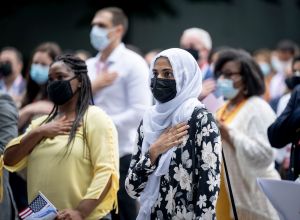
In order to become a citizen, a person first needs to become a Lawful Permanent Resident (LPR), which is the same as having a green card. After living in the United States for five years (or three under certain circumstances), LPRs can apply for citizenship. LPRs have similar privileges to citizens since they can apply for most jobs and stay in the country legally regardless of employment status. Unfortunately, it is difficult to become an LPR since the number of green cards issued each year is capped at 675,000. The only exceptions to this cap are for U.S. citizen’s spouses, parents, and children under 21, who can receive unlimited visas. Another restriction on legal immigration is that no group of permanent immigrants from a single country are allowed to exceed 7% of the total people immigrating in a given fiscal year. The 7% limit was mainly intended to prevent any one country from dominating immigration, but it serves to increase a backlog of pending immigration cases (“How the United States Immigration System Works”). Foreign students, tourists, and some other noncitizens who are admitted temporarily do not fall under the numerical caps. However, in order to apply for LPR status, people must go through a handful of specific avenues, such as family-based visas, work-based visas, and seeking asylum (“How the United States Immigration System Works”).
Path #1 to Apply for LPR Status: Family-Based Immigration
Family-based immigration is the main pathway to legal residence in the United States. In 2019, family-based immigrants made up 68.8% of all new LPRs. An unlimited number of visas are given to citizen’s spouses, parents, and unmarried children under age 21, while roughly 480,000 visas are available through a family preference system. The family preference system is for the adult children, brothers, and sisters of United States citizens and the spouses and children of LPRs. In order to sponsor one’s relative in family-based immigration, a person must file a sponsor petition for her, prove a legitimate family relationship, meet minimum income requirements, meet age requirements, and sign an affidavit that he will financially support his relative. The person immigrating needs a medical exam and required vaccinations and has to prove that she will not become dependent on the government to support herself. The government, in turn, analyzes her immigration and criminal history. Although family members have to jump through hoops to help their relatives migrate to the United States, family-based immigration is still fairly successful (“How the United States Immigration System Works”).
Path #2 to Apply for LPR Status: Employment
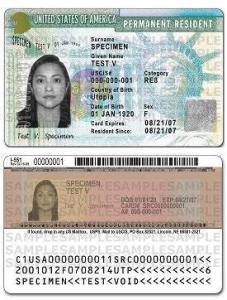
Roughly 13.5% of all new LPRs are admitted to the United States due to their employment. Many immigrants have temporary work visas, but most people with those visas have to leave the country when their status expires or employment ends. However, some of them can become LPRs if they are sponsored by their employers. Applying for an employment-based green card has a number of time consuming steps that vary depending on the immigrant’s visa category and whether or not the person is already in the United States. If she is residing in a foreign country, her visa application can’t even be filed until after U.S. Citizenship and Immigration Services (USCIS) approves her immigration petition. For foreign workers in some categories, their employer sponsors are legally required to test the labor market with the Department of Labor and confirm with the Secretary of Labor that their employee’s petition meets certain criteria. After that, either the employer or the employee can submit an application to USCIS, and finally the immigrant is required to submit another application to either adjust her status to LPR or apply at a United States embassy abroad. All of that is an uncertain and time consuming process due to the backlogs in the United States immigration system (“How the United States Immigration System Works”). The cap for permanent employment-based immigration is roughly 140,000 people a year, which includes immigrants’ eligible spouses and unmarried minor children. The work visa preference system selects people with exceptional abilities and advanced degrees over average or unskilled workers (“How the United States Immigration System Works”). As a result, only specific people can immigrate through their employment.
Path #3 to Apply for LPR Status: Coming As A Refugee
Refugees are admitted to the United States since they cannot safely live in their home countries due to a “well-founded fear of persecution.” Persecution happens when a person is targeted by discrimination and hate crimes because of his race, political opinion, religion, national origin, or membership in a particular social group. Refugees apply for aid outside the United States, usually from a “transition country” that’s different from their home country. Admission of refugees depends on the amount of risk they face, whether they have family in the United States, and whether they are in a group designated by the president and Congress as being of special concern. Each president and Congress sets the ceiling for refugee admissions. After 9/11, the refugee ceiling dropped abruptly, but then rose again until it was 111,000 in 2017. Over the Trump administration, the ceiling dropped until it reached 18,000 in 2020. When Biden took office in 2021, he raised the ceiling to 62,500, but admissions were so slow that the United States only took in 7,637 refugees in Fiscal Year 2021. Refugee admissions continue to be very slow (“How the United States Immigration System Works”). While refugees are not automatically granted LPR status, they can apply for and obtain LPR status one year after admission into the United States (“How the United States Immigration System Works”).
Path #4 to Apply for LPR Status: Coming As An Asylee
Asylum is given to people who are unable or unwilling to return to their home countries because they are either being persecuted or afraid of being persecuted “on account of race, religion, nationality, membership in a particular social group, or political opinion.” Extreme poverty and starvation are not legitimate reasons to be granted asylum (“Asylum in the United States”). Asylees are the same as refugees, except that they are applying for aid within the United States instead of from a foreign country. A person can either apply for asylum at a port of entry or within one year of entering the United States (“How the United States Immigration System Works”). Immigrants want asylum because it allows them to legally live and work, petition to bring other family members, potentially receive aid from government programs like Medicaid, and apply for LPR status after living in the country for one year. Asylum is a discretionary status since there is no law saying that everyone who fits the definition of a refugee has to be given asylum (“Asylum in the United States”). However, asylum seekers are not restricted by number limits or any specific criteria. About 46,508 people were granted asylum in Fiscal Year 2019 (“How the United States Immigration System Works”).
One reason why asylum is a hot topic is that a huge number of families and unaccompanied children have been crossing the United States- Mexico border to seek asylum. In the past, most people crossing illegally were single adults trying to avoid capture. In 2012, only 10% of the migrants crossing the border were families and children, and that percentage was unusually high. From October 2018 to February 2019, 61% were families and unaccompanied children. Most of them are asylum seekers who either turn themselves in to Border Patrol officers or wait for the Border Patrol to find them (Isacson). That situation has created a humanitarian crisis. Detention centers (Isacson) and homeless shelters have been overwhelmed (Ainsley), and many people have died trying to cross the border. In one instance, Border Patrol Agents rescued 17 people from the cold Rio Grande River on a day in February. Sixteen of them were Hondurans, and one was a three-year-old Guatemalan child. Its unclear if the child’s family died, if the child had been human trafficked, or if he or she had been traveling alone (Davis). It is necessary to understand asylum in order to handle the humanitarian crisis at the border.

In order to be granted asylum, seekers must prove that they fit the definition of refugees and provide evidence that they have either suffered persecution or have a “well-founded fear” of suffering persecution. Most people who arrive at a port of entry or enter the United States illegally apply for defensive or expedited asylum, which is for those being deported (“Asylum in the United States”). Asylum seekers are given “credible fear” interviews to determine their eligibility. If a seeker was deported before, he or she will be given a “reasonable fear” interview instead, which determines his or her eligibility for a separate designation named “withholding of removal.” Frequently, the Department of Homeland Security does not have the capacity to hold people for interviews, so they are released at the border with a notice to appear in court. Otherwise, long immigration case backlogs can cause people to be detained for years waiting for their “credible fear” interviews (“Asylum in the United States”).
A number of barriers bar people from seeking asylum. For starters, a person is not allowed to apply for asylum if she did not apply within her first year of entering the United States. That deadline is easily missed due to lengthy backlogs or if the applicant does not know about it. Many people are denied asylum exclusively because they miss the one year deadline. Another barrier is that many migrants have no legal council (“Asylum in the United States”). People with lawyers are five times more likely to be granted asylum, but many are unable to find or afford them (Isacson). Detention negatively effects people’s immigration cases because people who are detained are much less likely to find attorneys (“Asylum in the United States”).
Another problem is the immigration courts’ giant backlogs. On April 1, 2022, a backlog of 470,786 affirmative asylum cases were pending, and in July 2022, 1.82 million removal cases were open. Compare those numbers to the 46,508 people granted asylum in Fiscal Year 2019. Simply scheduling an interview can take as much as four years. In May 2022, the average seeker had waited 1,508 days (a little over 4 years) to be granted asylum. Over those years, seekers and their overseas families are left in limbo. After the first 150 days (5 months) of their cases pending, asylum seekers are allowed to apply for work, which they use to support themselves over the next years (“Asylum in the United States”).
The huge backlogs are partly due to the COVID-19 pandemic. Over the pandemic, 2.2 million asylum seekers were expelled from the United States due to Title 42, a pandemic related health policy, and the Remain in Mexico protocols forced others to remain in Mexico until their claims were processed. Now, both policies have been terminated (“Asylum in the United States”).
Possible Measures That Could Alleviate the Humanitarian Crisis
1. Increasing the number of immigration courts and hiring more judges so that the asylum system won’t have such long backlogs.
2. Giving asylum seekers better access to legal council. Seekers are five times more likely to be granted asylum if they have a lawyer, but many can’t afford to hire them (Isacson).
3. Expanding alternatives to detention programs. For instance, a program having case workers keep in touch with asylum seeking families was very successful and much cheaper for the government than detaining the families (Isacson).
4. Allowing people to seek asylum for extreme poverty. People who are starving are just as desperate as those fleeing from persecution.
5. Starting a general path for people to apply for LPR status regardless if someone has family in the United States, is qualified for asylum, or has a job in the country.
6. Creating a process for people to apply for visas from their home countries (Nunez-Neto).
7. Working together with Mexico’s asylum system to accommodate migrants from Central America. Mexico recently expanded their system to take on more seekers from Central America (Isacson).
8. Supporting initiatives to decrease corruption in Central America and sending humanitarian aid there.
Path #5 to Apply for LPR Status: The Diversity Visa Program
The Diversity Visa program is a computer generated lottery that allocates 55,000 permanent visas to people from countries who have had less than 50,000 of their residents immigrate to the United States over the past five years. Currently, this program helps Africans and Eastern Europeans. It was shut down by immigration bans in 2020, but was reopened in 2021. However, only 3,094 diversity visas were issued in Fiscal Year 2021 (“How the United States Immigration System Works”). In 2022, admissions picked up, and 7% of all new LPRs that year came through the diversity visa program (“Legal Immigration and Adjustment of Status Report Fiscal Year 2022, Quarter 4.”).
Other Legal Statuses for Immigrants
The United States grants multiple types of humanitarian statuses that do not provide a path to permanent citizenship. They are listed below.
1. Deferred Action for Childhood Arrivals, or DACA, allows people who were brought to the United States under age 16 and have lived here since 2007 to remain in the country lawfully and work for the next two years. In order to access the program, a person needs to have graduated high school or college or received a degree equivalent. It is continually renewed every two years. Unfortunately, it offers no path to permanent citizenship (“How the United States Immigration System Works”).
2. Deferred Enforced Departure (DED) protects individuals from deportation if their home countries are unstable. It is at the discretion of the executive branch (“How the United States Immigration System Works”).
3. Temporary Protected Status (TPS) is granted to people who are in the United States but can’t return home due to “natural disaster”, “extraordinary temporary conditions”, or “ongoing armed conflict” (“How the United States Immigration System Works”).
4. Humanitarian parole temporarily admits people to the United States for humanitarian reasons even if they don’t fit the definition of a refugee (“How the United States Immigration System Works”).
Becoming A Citizen

After becoming a Lawful Permanent Resident and living in the United States for either three or five years, becoming a citizen is comparatively easy. Prospective citizens must be at least 18 years old, demonstrate good moral character, pay an application fee, and pass English, history, and US civics exams. The exams are waived under certain circumstances (“How the United States Immigration System Works”). Finally, the LPRs become citizens when they take the Oath of Allegiance in a special ceremony (“10 Steps to Naturalization”). Immigrants who become citizens are worthy of respect since they persevered through a long and difficult process to reach their goal.
Conclusion
Researching for this article helped me better understand the steps that immigrants take to become United States citizens and the causes of the humanitarian crisis on the southwest border. I hope it was helpful for you as well. Feel free to share and comment on this post, and feel free to read some of my other blog articles!
Sources
Here are the sources I used for this article. Check them out if you are interested!
“10 Steps to Naturalization.” U.S. Citizenship and Immigration Services, https://www.uscis.gov/citizenship/learn-about-citizenship/10-steps-to-naturalization. Accessed Jul. 18, 2023.
Ainsley, Julia. “Migrant surge overwhelms Border Patrol and shelters in El Paso.” NBC News, Sept. 13, 2022, https://www.nbcnews.com/politics/immigration/migrant-surge-overwhelms-border-patrol- shelters-el-paso-rcna47588. Accessed Aug. 9, 2023.
“Asylum in the United States.” American Immigration Council, published Jun. 11, 2020 and modified Aug. 16, 2022, https://www.americanimmigrationcouncil.org/research/asylum-united-states. Accessed Jul. 18, 2023.
Davis, John. “Border Crisis: CBP’s Response.” U.S. Customs and Border Protection, Jun. 30, 2023, https://www.cbp.gov/frontline/border-crisis-cbp-s-response. Accessed Aug. 9, 2023.
“How the United States Immigration System Works.” American Immigration Council, Sept. 14, 2021, https://www.americanimmigrationcouncil.org/research/how-united-states-immigration-system- works. Accessed Jul. 17, 2023.
Isacson, Adam, Adriana Beltran, and Maureen Meyer. “There is a Crisis at the U.S.-Mexico Border. But its Manageable.” WOLA, Apr. 4, 2019, https://www.wola.org/analysis/fix-us-mexico-border- humanitarian-crisis/. Accessed Jul. 18, 2023.
“Legal Immigration and Adjustment of Status Report Fiscal Year 2022, Quarter 4.” U.S. Department of Homeland Security, https://www.dhs.gov/immigration-statistics/special-reports/legal- immigration. Accessed Aug. 31, 2023.
“Native Americans and the U.S. Census: How the count has changed.” USA Facts, Nov. 21, 2019, https://usafacts.org/articles/native-americans-and-us-census-how-count-has-changed/. Accessed Jul. 17, 2023.
Nunez-Neto, Blas. “Common Sense Solution to the Border Crisis.” The Rand Blog, May 2, 2019, https://www.rand.org/blog/2019/05/common-sense-solutions-to-the-border-crisis.html. Accessed Aug. 15, 2023.

 Owl Tree View