
Last year my family took part in a trash cleanup group with some of my neighbors, but it was only recently that I sorted the recyclables that we had picked up. As I pried caps and labels off plastic bottles and shook dirt out of aluminum cans, I began to wonder about the items’ eventual fate. For my last article, I had researched the United States’ problematic practice of shipping recyclables to other countries. I wondered if the items I was sorting would be converted into new bottles and cans or if they would end up cluttering a dump in another country.
Recycling single-use packaging makes sense since the packaging has caused problems worldwide. The increase in single-use items after World War II (Park) led to a myriad of landfills and islands of plastic trash in the ocean. Garbage in landfills takes an estimated 500 years to decompose, and the plastic in them leaches toxic chemicals into the ground (“The Truth About Bioplastics”). As a result, recycling seems better for the environment. However, it is not the best possible option. I wanted to list downfalls of recycling that would be better solved by reducing and reusing waste.
Problem #1: Recycling can create pollution in other countries.
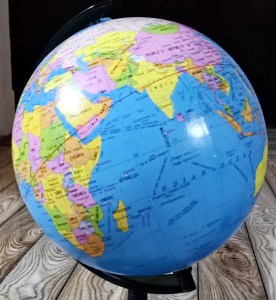
In my last article, I talked about China’s National Sword Policy, which took effect in 2018. The policy banned most recyclables from entering China, only allowing imports of ones with low rates of contamination. As a result, the United States has begun shipping recyclables to many other countries, including Ghana, Cambodia, and Bangladesh. An estimated 20% to 70% of it is thrown away since it is contaminated and thus unusable for recycling. Every year, the United States ships about 1 million metric tons of plastic waste overseas. The waste is harmful for the countries that accept it. For instance, in Southeast Asia, American plastic waste is linked to contaminated water, crop death, respiratory diseases, and organized crime (“Recycling in the U.S. Is Broken”).
In order to learn more about plastic recycling in developing countries, CBC Canada reporters pretended to be plastics brokers in Malaysia (“Tracking Your Trash” 00:00:45-00:00:52). They found that most recycling workers are payed little and labor in dangerous conditions (“Tracking Your Trash” 00:01:10-00:01:25). The reporters also found that Malaysia has many illegal recycling businesses that import huge amounts of plastic (“Tracking Your Trash” 00:01:25-00:01:40), while the country itself is trying to curb the influx of recyclables (“Tracking Your Trash” 00:04:15-00:04:27). They walked over hills of Canadian and American plastic bags at the plant of an illegal recycler that had been shut down. Now the plastic sat there, polluting the land (“Tracking Your Trash” 00:02:15-00:03:21). Malaysia’s environment minister had recently shut down 150 illegal recyclers (“Tracking Your Trash” 00:04:30-00:04:45). because they had been dumping and burning huge amounts of contaminated materials. Burning plastic constantly filled the air with smoke and fumes and killed its pristine forest (“Tracking Your Trash” 00:06:10-00:07:35). One woman that the reporters interviewed was concerned that her young son was becoming sick from the awful air (“Tracking Your Trash 00:08:00-00:08:42). Nearby, the reporters found tiny plastic pellets being ejected downriver from a recycling plant. Many people in a nearby town fished and farmed with the river’s water, which explained why some of them were becoming ill (“Tracking Your Trash” 00:09:40-00:11:00). According to one Malaysian activist, she was protesting the situation because she did not want her country to become an “international rubbish bin” (“Tracking Your Trash” 00:10:10-00:10:19).
Problem #2: There is little demand for recycled material.
Before China’s National Sword Policy, American communities were able to sell their recyclables to Chinese companies for money, but after the policy took effect, the communities have had to pay to have their recyclables removed. For instance, Bakersfield, California used to earn $65 for each ton of recyclables they sold, but now they have to pay $25 for each ton to be removed. Franklin, New Hampshire used to make $6 a ton selling recyclables. Now, residents can either pay $125 per ton to have them recycled or $68 per ton to have the same materials incinerated. The United States has no federal recycling program, so the National Sword Policy was dealt with differently by each of the 20,000 communities across the country that provide their residents with recycling services (“Recycling in the U.S. Is Broken”).
Problem #3: Most materials cannot be recycled infinitely.
Paper can be recycled between five and seven times, while plastics are usually recycled once or twice. In fact, only plastic No. 1 (PET) and plastic No. 2 (HDPE) are frequently recycled. Plastics with resin codes 3 through 7 are rarely recycled (“Recycling in the U.S. Is Broken”). Metals and glass are exceptions since they can usually be recycled infinitely.
Problem #4: Many plastic recyclables are not recycled.
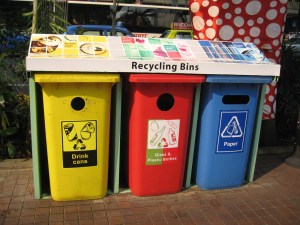
The recovery rate of plastics is poor. In 2015, Canadians recycled 79% of PET bottles and jars, but only recycled 11% of PET fruit holders and other clamshell containers (Chung). Overall, only 9% of Canadian plastic was recycled (“Tracking Your Trash” 00:17:00-00:17:15). Americans tried to recycle 29% of their plastic bottles in 2017 (Chung), but some of the bottles were contaminated, so ultimately only 21% of them were recycled (“Recycling in the U.S. Is Broken”). Six times more American plastic is incinerated than recycled. The main reason why plastic recycling is rare is that virgin plastic is cheaper than recycled plastic, so economically it makes more sense to produce new plastic (“Recycling in the U.S. Is Broken”). The low cost of virgin plastic is one of the main reasons why recycling is failing.
Problem #5: Some “recycling” companies are not required to recycle their plastic.
In British Columbia, Canada, reporters installed tracking devices on bales of plastic that were brought to different recycling companies (“Tracking Your Trash” 00:11:00-00:12:13). All three bales stayed in British Columbia, but out of three companies, only Merlin Plastics actually recycled the materials they were given (“Tracking Your Trash” 00:13:55-00:14:17). A company named GFL burned the plastic in an energy facility and took the remaining toxic ash to a landfill (“Tracking Your Trash” 00:14:18-00:15:17), while a company named Waste Connections brought the material directly to a landfill (“Tracking Your Trash” 00:15:18-00:16:16”). It turns out that supposed “recycling companies” in Canada are under no legal obligation to recycle the materials that they are given (“Tracking Your Trash” 00:16:16-00:16:35).
Problem #6: Recycling creates its own waste.
Whenever something is recycled, it goes through a chemical process that creates toxic waste. As a result, reducing and reusing are much better options than recycling (“Tracking Your Trash” 00:12:45-00:13:27). Unfortunately, whenever a government tries to ban a plastic item, both plastic producers and recyclers protest the ban, making it difficult to solve the problem (“Tracking Your Trash” 00:17:15-00:19:48).
Problem #7: Psychologically, having a recycling option can cause people to produce more waste.
A study published by Harvard Business Review showed that people use more cups and gift wrap when there is a recycling bin available. That shows that people count on recycling as an effective solution to harmlessly deal with their waste, which it is not (Dell).
How Recycling Works In One State
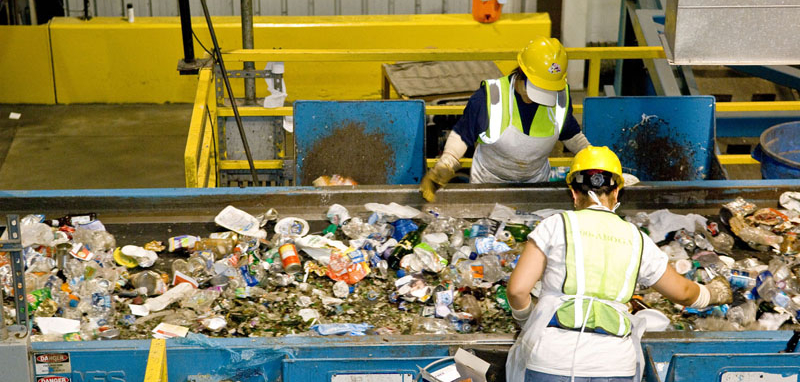
As a case study, I researched the recycling process in my home state of Massachusetts. Massachusetts has nine MRFs, or Material Recovery Facilities, which sort 638,000 tons of materials each year. Recyclables travel through a maze of manual and mechanical sorters, including high-tech equipment like the near-infrared technology that identifies different plastic resin types at the Springfield MRF. Once materials are sorted, the recyclables are crushed into thousand pound bales and sold to companies (“The Truth About Plastics Recycling”). Most paper and cardboard from western Massachusetts are sold to a buyer in eastern Massachusetts (Kaplan). Some plastics are sold to Unifi, a company whose recycling plant is in North Carolina (“The Truth About Plastics Recycling”). Unifi uses the plastic to make fiber, so they turn plastic bottles into carpets, athletic clothing, and elastic straps for masks (“Repreve”). It’s encouraging that Massachusetts has a well designed recycling program. However, it would be better for its residents to reduce their plastic usage.
A Typical PET Recycling Process
Step 1: PET items are collected in recycling facilities, or MRFs.
Step 2: The items are separated from other materials in the MRFs.
Step 3: The objects are squeezed into small bales and transported to a different facility.
Step 4: The bales of plastic are processed by being separated into color streams and ground up into small flakes.
Step 5: The flakes are washed to remove lids, rings, labels, and glue.
Step 6: After being washed, the flakes are heated to decontaminate them of post consumer substances and flavors.
Step 7: The plastic flakes are melted, and solid contaminants are strained out using a melt filter. In some places, this step happens before step 5.
Step 8: The molten plastic is cooled and converted into spherical, crystallized PET pellets.
Step 9: The plastic pellets are melted again and made into preforms. The preforms are then sent to manufacturers who make them into different bottle designs.
If PET plastic is not pure enough to be made into bottles again, it will be melted, stretched into fiber, and spun to make polyester yarn, which is found in everything from winter coats to roofing insulation (“How does PET plastic recycling work?”).
Infinitely Recyclable Plastic: A solution to the world’s plastic problems?
Recently, a team of researchers at Lawrence Berkeley National Laboratory developed a new type of plastic which can be recycled infinitely without a reduction in its quality. The new plastic is called PDK. In order to understand why PDK is so recyclable, its helpful to provide some background information about plastics. Plastic resins are made of many individual molecules called monomers bound together to form long chains called polymers. In order to give textures, colors, and other properties to plastics, their resins are mixed with additives, including pigments, heat stabilizers, and flame retardants. In normal plastic recycling, plastics with different additives are melted down together. The additives mix poorly, contaminate the resin, and give the recycled plastic a lower quality. PDK, however, is different from traditional plastics in that its polymers easily break down into monomers when mixed with an acid. As a result, its easy to separate the plastic molecules from additives and use them to make new plastic (Kovner).
PDK looks fairly promising, and manufacturers are already interested in buying it. PDK would save money for industries that are given back their products at the end of their lifespan, such as automobile and electronics businesses. It could also potentially be used for packaging. While PDK is currently produced with chemical processes, it could eventually be produced using microbes (Kovner).
Infinitely recyclable plastics will be helpful, but they are not a solution to the world’s burgeoning plastic problem. While PDK is useful for longterm products like cars and electronics, single-use PDK packaging would cause as many problems as other single-use plastics since not everyone would be responsible enough to recycle it. In addition, the acids used to recycle PDKs and the plastic additives removed during the recycling process could become their own toxic waste. PDKs are a promising development for recycling, but they are not a panacea for the plastics problem.
Can compostable and biodegradable plastics be recycled?
No, compostable and biodegradable plastics usually cannot be recycled. Similar to bioplastics, they can contaminate the recycling process, creating more waste. To avoid contamination, be careful to only recycle items that are accepted in your town. Compostable plastics can be composted in either home compost or an industrial composting facility. It is much easier for plastics to decompose in a professional compost facility since those facilities have controlled conditions. As a result, only put materials marked “home compostable” in a home compost pile. Similar to transfer stations and recycling pickup services, professional composting services may only accept certain items. Be careful to only give them compostable plastics that they accept. Its more difficult to figure out what to do with biodegradable plastics. If a plastic is labeled “biodegradable”, that means that it was able to break down into natural substances in controlled conditions in a lab. However, it’s unclear what the controlled conditions were, so the plastic may not be compostable. Some professional composting facilities accept biodegradable plastics, but its important to check with the facility (“Is biodegradable and compostable plastic good for the environment?”).
Greenwashing
Greenwashing is when companies use deceptive marketing to appear more environmentally friendly than they actually are. For instance, Coca-Cola has been advertising its PlantBottle, a plastic bottle made from 30% sugarcane and 70% petroleum. The bottle is not biodegradable and is very much like traditional petroleum bottles (Robbins). In fact, items made of hybrid plastic were found to be the worst for the environment in a 2010 University of Pittsburgh study (“The Truth About Bioplastics”). However, that does not stop Coca-Cola from promoting how the PlantBottle can help “find a solution to our planet’s packaging problem” (“FAQ: What is PlantBottle packaging?”).
Another famous example of greenwashing is the Keep America Beautiful campaign, which originally encouraged people to pick up litter. However, it was founded by large packaging businesses like the American Can Company and the Owens-Illinois Glass Company. While the organization claims to be against littering, in reality, its members have lobbied against single-use bottle bans and bills requiring packaging to be returnable or recyclable instead of disposable (Park). If those bills had been passed instead of shut down, they could have reduced the American garbage crisis.
Common greenwashing tactics include putting all the blame on consumers for environmental problems, marketing products as environmental when they actually aren’t, and pretending to be more sustainable than they are so governments don’t regulate them (Park). It is difficult to tell the difference between greenwashing and genuinely environmental products. Greenwashed products are labeled with popular, vague terms like “plant-based”, “bio-based”, and “sustainable”, while products that are actually produced ethically are likely certified by third parties (Robbins). If you want more tips on how to recognize greenwashing, read this article: www.ctsbcouncil.org/types-of-greenwashing/.
Is recycling worth it?
Recycling is helpful since it is a way to reuse materials so that they aren’t wasted. I will keep recycling in the hopes that the items I am bringing to the transfer station will be turned into fiber, new cans, and other useful products. However, recycling is not the solution to the world’s waste problem. Reducing and reusing are much better options.
In my view, the best solution would be for everything to be reusable. Imagine if people could buy bread from the store in a reusable bag. They put the reusable bread bag in a reusable shopping bag and take the bread home. After a person is done with her bread, she can bring the bread bag back to the store, where it is washed and used to store more bread. Stores could receive their products in bulk shipping containers that are used for multiple shipments. While my idea sounds far fetched, glass soda bottles were reused through a similar cycle in the 1970s. After a number of plastic bag bans in Canada, stores are already developing systems for customers to return reusable bags (Harris). Those systems could be replicated for other packaging.
In the future, innovations will further reduce the world’s waste problem. Infinitely recyclable plastics will be helpful for car parts and medical applications. Compostable bioplastics could come in handy as single-use takeout containers. However, steering clear of plastics is probably a better solution. Glass and metal are both plastic alternatives that can be recycled infinitely. Aluminum recycling is more successful than plastic recycling since recycling aluminum is cheaper than mining (Husband) and prevents the environmental degradation mining causes (“Aluminum Recycling”). Paper is also better because it is biodegradable. In addition, a number of new plastic alternatives are being produced by different companies. The Japanese design company AMAM makes packaging from the agar in red marine algae. Meanwhile, the United States Department of Agriculture developed a biodegradable and edible film from the milk protein casein. The film is 500 times better at keeping food fresh than plastic. Finally, the New York based company Ecovative uses mycelium to make a variety of objects. Mycelium, which is similar to mushroom roots, can be made into biodegradable packaging material, planters (“The Truth About Bioplastics”), vegan leather, and even a chair (Ecovative). All of those alternatives are made from organic substances and thus are easily biodegradable in nature.
Legislation
Legislation banning various plastic items is more helpful than recycling. A number of places have banned plastic bags, which has greatly reduced plastic bag litter. Austin, Texas experienced a 90% reduction in plastic bag litter in the first six months of its bag ban. Unfortunately, the ban was later nullified by the Texas Supreme Court. San Jose, California’s ban cut plastic bag litter by 89% in storm drains, 60% in creeks and rivers, and 59% in city streets. Washington, D.C. also experienced a drop in litter when 30% less bags were collected in cleanups. Free water bottle refill stations and bottle deposit laws have effectively reduced litter as well (Dell). Currently, the Massachusetts legislature is reviewing bills to phase out single-use plastics, and I am eagerly awaiting their decision.
Conclusions
I hope you’ve enjoyed reading this article on recycling. Let’s work together to reduce the world’s trash. Feel free to share this post, comment on it, or check out some of my other blog articles!
Sources
Here are the sources I used for this article. Feel free to check them out!
“Aluminum Recycling: Process To Recycle Aluminum and it’s Benefits.” Conserve Energy Future, www.conserve-energy-future.com/aluminum-recycling.php. Accessed May 22, 2023.
Cho, Renee. “Recycling in the U.S. Is Broken. How Do We Fix It?” Columbia Climate School: State of the Planet, Mar. 13, 2020, www.news.climate.columbia.edu/2020/03/13/fix-recycling-america/. Accessed May 16, 2023.
Cho, Renee. “The Truth About Bioplastics.” Columbia Climate School, Dec. 13, 2017, www.news.climate.columbia.edu/2017/12/13/the-truth-about-bioplastics/. Accessed May 24, 2023.
Chung, Emily. “What really happens to plastic drink bottles you toss in your recycling bin.” CBC News, Jan. 7, 2020, www.https://www.cbc.ca/news/science/bottle-recycling-1.5416614. Accessed May 16, 2023.
Dell, Jan. “Six Times More Plastic Waste is Burned in U.S. Than is Recycled.” plasticpollutioncoalition, Apr. 30, 2019, https://www.plasticpollutioncoalition.org/blog/2019/4/29/six-times-more-plastic-waste-is- burned-in-us-than-is-recycled. Accessed Jun. 9, 2023.
Ecovative. Ecovative, www.ecovative.com/. Accessed May 24, 2023.
“FAQ: What is PlantBottle packaging?” The Coca-Cola Company, https://www.coca- colacompany.com/about-us/faq#accordion-5cffeff75d-item-223ba6a67e. Accessed June 7, 2023.
Harris, Sophia. “Walmart’s plastic bag ban leaves some customers saddled with mounds of reusable bags.” CBC News, Dec. 19, 2022, www.cbc.ca/news/business/walmart-reusable-bags-plastic- ban-1.6687315. Accessed May 25, 2023.
“How does PET plastic recycling work?” End Waste: Recycle the 1, www.recycletheone.com/recycle- now/how-does-pet-plastic-recycling-work. Accessed May 22, 2023.
Husband, Tom. “Aluminum Recycling.” ACS Chemistry for Life, Apr. 2012, www.acs.org/education/resources/highschool/chemmatters/past-issues/archive-2011- 2012/aluminum-recycling. Accessed May 23, 2023.
“Is biodegradable and compostable plastic good for the environment? Not necessarily.” WWF, Apr. 8, 2022, www.worldwildlife.org/blogs/sustainability-works/posts/is-biodegradable-and- compostable-plastic-good-for-the-environment-not-necessarily. Accessed May 24, 2023.
Kaplan, Mimi. “Where does your trash and recycling go?” Daily Hampshire Gazette, Oct. 10, 2018, www.gazettenet.com/Where-Does-Your-Trash-and-Recycling-Go-20731098. Accessed May 18, 2023.
Kovner, Aliyah. “The Future Looks Bright for Infinitely Recyclable Plastic.” News From Berkeley Lab, Apr. 22, 2021, www.newscenter.lbl.gov/2021/04/22/infinitely-recyclable-plastic/. Accessed May 23, 2023.
Park, William. “How companies blame you for climate change.” BBC Future, May 5, 2022, www.bbc.com/future/article/20220504-why-the-wrong-people-are-blamed-for-climate-change. Accessed May 25, 2023.
“Repreve: Made for the Good of Tomorrow.” Unifi, www.unifi.com/repreve. Accessed May 18, 2023.
Robbins, Jim. “Why Bioplastics Will Not Solve the World’s Plastics Problem.” Yale Environment 360, Aug. 31, 2020, www.e360.yale.edu/features/why-bioplastics-will-not-solve-the-worlds-plastics- problem. Accessed May 24, 2023.
“The Truth About Plastics Recycling.” Sudbury Massachusetts, Dec. 2, 2022, www.sudbury.ma.us/transferstation/2022/12/02/the-truth-about-plastics-recycling/. Accessed May 18, 2023.
“Tracking Your Trash: Exposing Recycling Myths.” CBC News, 2019, www.cbc.ca/player/play/1610048067611. Accessed May 17, 2023.

 Owl Tree View
This is awesome!
LikeLike